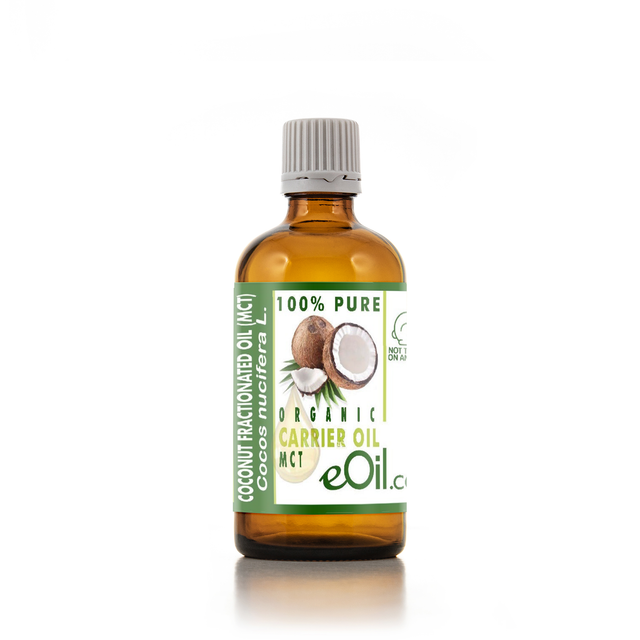


Fractionated MCT Carrier Oil
Fractionated MCT Carrier Oil - Coconut MCT 100 ml is backordered and will ship as soon as it is back in stock.
Description
Description
Using Macerated Carrier Oils in Perfumery
This is the "Ideal Carrier Oil" for aromatherapists and DIY makers.
Discover the ultimate "invisible" carrier oil. Our Organic Fractionated Coconut and Palm Oils (also known as MCT Oil) is pure coconut oil that has been distilled to remove the long-chain fatty acids.
Why "Fractionated"? Unlike regular (raw) coconut oil which is solid and smells tropical, Fractionated Coconut Oil stays permanently liquid, is completely odorless, and is crystal clear. This makes it the #1 choice for aromatherapy, as it will never alter the scent of your essential oil blends or clog your diffuser/pump bottles.
Key Benefits & Uses:
The Perfect Aromatherapy Base: Because it is odorless and colorless, it is the ideal neutral base for diluting essential oils. It allows the true aroma of your essential oils to shine without interference.
Non-Greasy & Fast Absorbing: It is incredibly lightweight. It absorbs into the skin faster than almost any other oil, leaving no greasy residue and no stained sheets, making it a favorite for massage therapists.
MCT Power (Skin & Hair): Rich in Medium Chain Triglycerides (MCTs) like Capric and Caprylic acid, it provides deep hydration and creates a soothing barrier without clogging pores. It is excellent for hydrating oily or acne-prone skin and for smoothing frizzy hair without weighing it down.
Long Shelf Life: It is extremely stable and resistant to oxidation, meaning your DIY blends will last much longer than with other plant oils.
How to Use: Use as a base for massage oils, rollerball perfume blends, or hair serums. It is ready to use straight from the bottle.
DESCRIPTION
INCI name; Cocos nucifera (Coconut) Oil, Caprylic / capric triglycerides
CAS number 8001-31-8/ 73398-61-5
SKU code: CO-COF-0100
EXTRACTION METHOD: fractionation of virgin coconut oil (for more see info tab)
PARTS USED: organic virgin coconut oil (kernel)
ORIGIN: Malaysia/ Indonesia/ Philippines.
COMMON NAMES: coconut fractionated oil, coconut MCT, FCO, caprylic oil, liquid coconut oil
APPEARANCE: colourless to pale yellow viscous liquid/oil
ODOUR NOTE: none. Odourless.
STORAGE CONDITION; Store in a cool dark place
COCOS NUCIFERA
REHYDRATING, SMOOTHING FOR DRY OR DAMAGED SKINS AND BODY
COMPOSITION: 56,4% CAPRYLIC ACID, 43% CAPRIC ACID (0.3% LAURIC ACID) Vit. A-E
REHYDRATING, SMOOTHING FOR DRY OR DAMAGED SKINS AND BODY
INCI name: Caprylic / capric triglycerides
SYNONYMS/ COMMON NAMES: Palm MCT (Medium Chain Triglyceride Oil);
MCT 60/40; Palm kernel fractionated oil, coconut MCT, caprylic oil, liquid palm kernel
oil
CAS number: 73398-61-5
EXTRACTION METHOD: Esterification (Accepted and Allowed process under the
international COSMOS standard) of Palm Kernel oil. Natural origin index 1.0 (100%)
PARTS USED: Palm Seed/Kernel (not fruit pulp) and Palm glycerine
COMPOSITION: 59% C8:0 (CAPRYLIC ACID), 41% C10:00 (CAPRIC ACID)
ORIGIN: Malaysia (sustainable Palm Oil from RSPO Plantations)
APPEARANCE: Colourless, Clear, LIGHT FLOWING liquid/oil
ODOUR NOTE: Odourless.
QUALITY: 100 % natural origin carrier oil obtained from Palm kernels oil,
without coconut oil or any other plant derivatives, no petroleum or synthetic
hydrocarbon added during process. Meets the quality standards of European
Pharmacopeia (for health and beauty products).
Soluble in Oil – Insoluble in water- not soluble in ethanol (or alcohol products)
Smoke point: Low between 150°C and 160°C
STORAGE CONDITION; Store in a cool dark place
INFO AND INTERESTING FACTS: MCT (Medium Chain Triglyceride
Oil) cannot be extracted from regular red palm oil. Red Palm oil (extracted from the
fruit pulp) is mostly saturated fatty acid (Palmitic acid, C16:0) and Stearic acid,
C18:0) and has practically no C8/C10.It is the palm seed/ kernel (the white “almond”
inside the seed) that is fractionated, to obtain the Caprylic acid (C8) and Capric acid
(C10) through esterification with palm glycerine.
PROPERTIES
+++ Main property; ++ Major property; + Minor property
COMEDOGENIC (Causes clogging of pores) 0=NO, 1 to 2 = HARDLY, 3 to 4 = YES, 5= VERY
• COMEDOGENIC:2
• HYDRATING AND SMOOTHING: +++
• ANTIFUNGAL: ++
• NOURISHING: ++
• ANTI-INFLAMMATORY: ++
• ANTIOXYDANT: +
• DRY, FLUID OIL, SILKY TO THE TOUCH: +++
• EXCELLENT SKIN ABSORPTION ABSORBS FAST, WITHOUT LEAVING A GREASY FILM: +++
• EMOLLIENT: SOOTH AND SOFTENS THE SKIN: +++
• DILUTING AGENT TO ESSENTIAL OILS AND OTHER VEGETABLE OILS: +++
• LIGHT OIL: LET THE SKIN BREATHE NATURALLY: +++
• VERY STABLE AT OXIDATION: +++
• NATURAL SOLVENT FOR PLANT MACERATIONS/infusions: +++
INDICATIONS: ALL SKIN TYPES, COMBINATION AND OILY SKIN TYPES. Sensitive and reactive skins. DRY AND BREAKING HAIR. FRIZZY, CURLY, COILY HAIR.
USES
• Use as an ingredient in your preparations:
• To your base creams, lotions or butters that might feel too thick, to add lightness, a silky, refined touch, improve the texture or spread factor and absorption
• When making your own whipped butters or balms
• As a body oil, applied right after shower/bath, to a wet skin, for maximum hydration.
• To create light and dry body oils and massage balms, especially well-suited for warm seasons or climates
• To create face serums (add dry skin, anti-aging… botanical complexes)
• To create anti frizz hair serums that will protect, smooth, and not leave your hair feeling greasy
• To create mask, no poo shampoo, in combination with clays
• As a base oil before applying make-up,
• To remove makeup efficiently, combined with hydrosols (or water) and apricot kernel oil
• To create your own macerated/ infused oil plant macerates with fresh or dry plants
• To dilute essential oil for bath.
MCT COCONUT VS PALM INFORMATION
SUMMARY SYNOPSIS & COMPARISON AT A GLANCE
Executive Synopsis
- Molecular Identity: Caprylic/Capric Triglyceride (INCI) purified through fractional distillation to an exact 60% Caprylic Acid (C8) / 40% Capric Acid (C10) ratio.
- Comedogenicity Index: Drops from 4/5 (crude coconut oil) to 0/5 (100% non-comedogenic) by eliminating heavy, pore-clogging lauric (C12) and oleic acids.
- Fungal-Acne Certified "Malassezia-Safe": Malassezia yeasts feed exclusively on carbon chains between C11 and C24. By isolating C8 and C10, MCT oil cannot be metabolized by fungal yeasts, making it completely safe for seborrheic dermatitis and fungal folliculitis.
- Dermatological Superpowers: Strengthens the skin barrier without occlusion, reduces transepidermal water loss (TEWL), provides antimicrobial/antioxidant defense, and acts as an active penetration booster for vitamins, retinol, and sunscreens.
- Mechanical Double Cleansing: Cleanses strictly by the physical law of "fat dissolves fat"—dissolving oxidized sebum, waterproof makeup, and sunscreens without detergent foam or lauric surfactant action.
- Soap Making Advisory: Completely unsuitable for traditional saponified soaps due to the total removal of lauric (C12) and myristic (C14) acids.
MCT Coconut vs. MCT Palm Kernel (60/40) Comparison Table
| Feature / Criterion | Fractionated Coconut MCT (60/40) | RSPO Palm Kernel MCT (60/40) | Dermatological Impact |
|---|---|---|---|
| INCI Nomenclature | Caprylic/Capric Triglyceride | Caprylic/Capric Triglyceride | Identical molecular structure & efficacy |
| Fatty Acid Profile | 60% C8 (Caprylic) / 40% C10 (Capric) | 60% C8 (Caprylic) / 40% C10 (Capric) | 100% Chemically identical fatty acid active |
| Comedogenic Rating | 0 / 5 (Non-Comedogenic) | 0 / 5 (Non-Comedogenic) | Will not clog pores or trigger breakouts |
| Allergy & Safety Profile | Trace residual protein risk for coconut allergy sufferers | 100% Coconut-Free Hypoallergenic Alternative | Absolute medical safety for coconut-allergic skin |
| Fungal Acne / Malassezia | Certified Malassezia-Safe (C8/C10) | Certified Malassezia-Safe (C8/C10) | Cannot feed seborrheic dermatitis or yeasts |
| Skin Texture & Finish | Ultra-fluid, dry touch, non-greasy | Ultra-fluid, dry touch, non-greasy | Identical velvety absorption & zero residue |
| Ecological Land Yield | Lower yield per hectare (requires 3–10x more land) | High yield (3–4 tons oil/hectare; RSPO/MSPO Certified) | RSPO/MSPO audits guarantee deforestation-free land |
Caprylic/Capric Triglyceride (Coconut vs. Palm Kernel MCT)
Medium-Chain Triglycerides (C8:C10 60/40 Ratio)
THE DERMATOLOGICAL ACTIVE VECTOR OF MOLECULAR PURITY. CREATED THROUGH FRACTIONAL DISTILLATION TO ISOLATE PURIFIED CAPRYLIC ACID (C8:0, 60%) AND CAPRIC ACID (C10:0, 40%), THIS ULTRA-LIGHT, DRY-TOUCH EMBEDDED ESTER TRANSFORMS HEAVY VEGETABLE LIPIDS INTO A TOTALLY NON-COMEDOGENIC (0/5) SKIN VECTOR. CERTIFIED MALASSEZIA-SAFE, IT RESTORES THE EPIDERMAL LIPID BARRIER, ELIMINATES TRANSEPIDERMAL WATER LOSS, AND ENHANCES THE DEEP PENETRATION OF ACTIVE VITAMINS AND BOTANICAL EXTRACTS.
IDENTIFICATION & SPECIFICATIONS
- INCI Nomenclature: Caprylic/Capric Triglyceride (or Fractionated Vegetable Oil)
- Chemical Profile: 60% Caprylic Acid (C8) / 40% Capric Acid (C10)
- Molecular Status: Purified medium-chain triglycerides (100% free of C12 Lauric Acid and C14 Myristic Acid)
- Botanical Sources: Organic Coconut (Cocos nucifera) or RSPO/MSPO Certified Palm Kernel (Elaeis guineensis)
- Comedogenic Rating: 0 / 5 (Completely non-comedogenic and pore-safe)
- Texture & Appearance: Water-clear, ultra-fluid, odorless, dry-touch liquid
- Fungal Safety: Certified Malassezia-Safe (carbon chains below C11 threshold)
- Shelf Life & Stability: Superior oxidative stability; highly resistant to rancidity
THE SCIENCE OF EXTREME REFINING: FROM CRUDE OIL TO DERMO-ACTIVE
1. Eliminating Comedogenicity & Pore Clogging
Crude coconut and crude palm kernel oils have a high comedogenicity rating (4/5) due to their heavy content of lauric acid (C12, ~50%), myristic acid (C14, ~18%), and oleic acid. Super-refining through hydrolysis and fractional distillation removes these heavy fatty acids entirely, isolating only caprylic (C8) and capric (C10) acids. This targeted chemical purification drops the comedogenicity rating to 0/5, transforming a potentially pore-clogging raw fat into a light, highly biocompatible skin active ideal for oily and acne-prone skin.
2. The Anti-Fungal Acne Shield (Malassezia-Safe)
Fungal acne (Malassezia folliculitis) and seborrheic dermatitis are caused by Malassezia yeasts naturally present on the skin. Microbiological research proves that Malassezia feeds exclusively on fatty acid carbon chains containing between 11 and 24 carbon atoms. Because fractionated MCT oil contains strictly C8 and C10 short-chain triglycerides, it falls below what the yeast can metabolize. MCT oil is one of the few oils clinically certified "Malassezia-safe," bringing essential lipid lubrication to dry or reactive skin without feeding fungal growth.
3. Active Vector & Skin Penetration Enhancer
Due to its reduced molecular size and low surface tension, Caprylic/Capric Triglyceride integrates seamlessly between the intercellular lipids of the stratum corneum. Formulation studies prove that MCT oil acts as a powerful penetration "enhancer" (carrier solvent). When combined with active ingredients—such as Retinol, Vitamin C, or UV sunscreens—MCT oil carries these active molecules through the outer epidermal barrier far more effectively than crude vegetable oils or mineral oils.
DEBUNKING THE CLEANSING & SOAP-MAKING MYTHS
The Physical Principle of Mechanical Cleansing
MCT oil (60/40) contains 0% lauric acid and no cleansing detergent surfactants. Its effectiveness in first-cleansing (double cleansing) derives entirely from the physical law that "fat dissolves fat." Thanks to its ultra-fluid viscosity and low surface tension, MCT oil penetrates into pores to mechanically dissolve oxidized sebum, stubborn sunscreens, and hydrophobic makeup so they can be wiped away before a second water-based wash.
Why MCT Oil Cannot Be Used for Soap Making
Crude coconut and palm kernel oils are the "kings of soap making" because their high lauric (C12) and myristic (C14) acid content saponifies into Sodium Cocoate or Sodium Palm Kernelate, generating abundant lather, large bubbles, and soap bar hardness. Because fractionation removes C12 and C14 completely:
- Attempting to make soap with MCT oil produces zero foam or lather.
- The resulting sodium salts of C8 and C10 are hyper-soluble in water, causing the soap to melt rapidly, absorb air moisture, and become sticky.
- Short C8/C10 carbon chains cannot form the solid micelles required for effective detergent washing.
COCONUT MCT vs. PALM KERNEL MCT: THE ALLERGY & ECOLOGICAL TRUTH
Chemical & Dermatological Parity
When purified to the standard 60/40 C8/C10 profile, Coconut MCT and Palm Kernel MCT are 100% chemically identical. There is zero molecular difference in skin feel, absorption rate, or dermatological performance between the two plant origins.
The Hypoallergenic Precautionary Advantage
Real allergic immune reactions are triggered by plant proteins, not lipids. During industrial refining, trace process impurities or residual coconut proteins may theoretically remain in Coconut MCT. For individuals with severe coconut allergies, RSPO Palm Kernel MCT provides a 100% coconut-free, hypoallergenic alternative with zero cross-contamination risk.
Ecological Yields & RSPO Sustainability
While coconut palm carries a tropical "postcard" image, scientific land-use studies show that oil palm (Elaeis guineensis) produces 3 to 4 tons of oil per hectare, requiring 3 to 10 times less land than coconut palms to yield the same volume of oil. According to IUCN scientific studies published in Current Biology, coconut cultivation threatens 20.3 endemic species per million tons produced compared to 3.8 species for oil palm, due to coconut's prevalence on fragile island ecosystems. Choosing RSPO-certified (Segregated/Mass Balance) or MSPO-certified Palm Kernel MCT guarantees third-party audited, deforestation-free sourcing.
UNIVERSAL FORMULATION RATIO GUIDE
1. Facial Serums & Oily Treatments
- Recommended Inclusion: 50% to 100% of the oil phase.
- Formulation Rule: Can be applied 100% pure as an ultra-light night serum (e.g., Bakuchiol or active oil treatments). When combined with heavy, viscous crude oils (such as Avocado, Argan, or Wheat Germ), blend at a 50% MCT / 50% Crude Oil ratio to eliminate stickiness and accelerate deep skin penetration.
2. Body & Massage Oils
- Recommended Inclusion: 30% to 50% of the total formula.
- Formulation Rule: Pure 100% MCT absorbs so rapidly that massage glide stops within 30 seconds. For an optimal professional massage blend, combine 40% MCT Oil (for lightness and penetration) with 60% high-glide carrier oil (such as Sweet Almond, Olive, or Sunflower Oil).
3. Warm Soy Massage Candles
- Recommended Inclusion: 20% to 30% of total candle weight.
- Formulation Rule: Combine 50% Soy Wax, 20%–30% Shea or Cocoa Butter, and 20%–30% MCT Oil. The MCT oil keeps the melted wax flexible, lowers the melting pool temperature to a comfortable 38°C for body application, and leaves a silky, non-greasy after-feel.
4. Creams & Emulsions (Lotions)
- Recommended Inclusion: 5% to 15% of total emulsion formula.
- Formulation Rule:
- Light Day Lotion: Use 10% MCT Oil and 5% crude vegetable oil.
- Rich Winter Cream: Use 5% MCT Oil and 15% rich butter (Shea Butter). MCT breaks up the "whitening" drag and heavy feel of solid plant butters.
5. Roll-On Oily Perfumes
- Recommended Inclusion: 85% to 90% MCT Oil to 10%–15% Fragrance/Essential Oil Concentrate.
- Formulation Rule: MCT oil is completely odorless, colorless, and highly oxidation-resistant (never goes rancid). Dissolve 10%–15% essential oil concentrate directly into 85%–90% MCT oil for a fast-penetrating, non-staining perfume roll-on.
SAFETY & HANDLING INFORMATION
- External Cosmetic Use Only: Designed for topical skincare, body care, and aromatherapy formulations.
- General Skin Safety: Non-irritating and suitable for sensitive, atopic, and reactive skin barriers.
- Patch Testing: Always perform a standard 48-hour patch test before introducing new formulation blends.
CAUTION
Keep out of reach of children and pets.
As a general rule, always perform a skin patch test before using your essential oils for the first time.
Fractionated MCT Carrier Oil

Fractionated MCT Carrier Oil - Coconut MCT 100 ml is backordered and will ship as soon as it is back in stock.